Were the Supernatural Anunnaki Real?
The gods of Sumer
236,000 BC - 2000 BC Mesopotamia
“It’s amazing! Look!” Jay typed in ALL CAPS as he shared the latest exciting topic, showing a sinister-looking ancient Mesopotamian king with a braided beard lying in what appears to be a coffin. “They’ve been hiding the truth about the Anunnaki from us!”
Now, sometimes it’s unclear who the “they” are and why “they’ve” been hiding anything, but the stories of the Anunnaki and the Sumerian king list are among those more exotic theories.
The story goes something like this (and there are many forms): a long time ago, super beings or aliens called the Anunnaki existed. These supernatural beings created mankind. Intertwined in this story is a long list of Sumerian kings who ruled for over 200,000 years, and some of them were divine. All of this is real and is being hidden from people, especially the discovery of an Anunnaki tomb that “higher authorities” in Iraq are concealing from the world.
It’s hard to wrap our heads around this special one, but as we do, let calmer heads prevail. We’ll look at what we know about both the Anunnaki and the Sumerian king list.
Remember when we talked about the Sumerians of ancient Mesopotamia? They were the source of many gods, goddesses, and creation myths. The Anunnaki specifically were deities, and while their origin is Sumerian, they were adopted by Akkadians, Assyrians, and Babylonians. They were the offspring of An, the god of heaven, and Ki, the goddess of earth. You may have heard of some of the famous gods of the Anunnaki—like Ishtar (Akkadian), the goddess of war, who was originally Inana (Sumerian), or the moon god Nanna. Enlil was another principal god of the Sumerians.
If we remove the modern stories around the Anunnaki, they were essentially the main gods of the Mesopotamian pantheon, just like in many other religions and civilizations. For example, Amun, Ra, and Seth of the Egyptians; Zeus and Hades of the Greeks; Jupiter and Pluto of the Romans; Indra, Brahma, and Yama of the Hindus; Odin and Hel of Norse mythology; or Viracocha of the Incas. While the Anunnaki are special in their own ways, the fact that we have such gods is nothing special or unusual.
But what about the Sumerian king list? Where does that factor into this story? Yes, that’s an interesting one.
The Sumerian King List
In the late 19th century, several archaeologists working around popular Sumerian dig sites like Nineveh and Uruk found clay fragments that they pieced together to create the Sumerian king list. The list itself was probably composed over centuries, with the final fragments dating around 2000 BC, during or after the fall of the last major Sumerian king (Ibbi-Sin of Ur). The list purports to show all the Sumerian kings before and after a “great flood.”
There are over 100 kings on the list. But what makes it controversial is the span of the kings, which is where “interesting” theories stem from. The list suggests that some kings, especially those earlier in the rule, reigned for between 28,800 to 43,000 years (yes, years!). The latter kings, starting around 3000 BC, appear to have more realistic reigns, with archaeological evidence available for some, such as Ur-Nammu. So why the fantastical claims around the list?
The confounding claims follow an interesting pattern of conspiracies: if something was written, it must have been true. Before we dig into that, let’s do a mental exercise.
Imagine you’re a big collector of comics. You have a precious Superman and Spiderman collection, and one day you decide to put the books in a super secure vault in a deep hole you dug in your basement. You get older, die, time passes, and before we know it, your city has morphed, grown, died, and it’s 4000 years from now. Sometime in between, mankind gets into a major war, destroying most of our civilization, and rebuilds. Future archaeologists find remnants of physical books on science, art, and history. One day, an adventurous digger finds your vault. There’s a huge celebration, kind of like finding the Dead Sea Scrolls in Southern Illinois. The comics are in pretty good shape. They read them with great fascination.
And then, three months later, Cousin Clay in 4100 AD declares on FB Future that “the archaeologists are hiding the fact that there was a lost advanced civilization in 2024 with flying beings!”
The truth is they are just comics that came from fertile imaginations. Our ancestors had great imaginations just like us, and the scribes who wrote those astronomical numbers for ancient kings were probably following conventions that made sense to them — not writing literal history. The Sumerian king list is one such example where myth mixed with reality to portray the glory of a civilization and establish the legitimacy and divinity of its rulers.
There are other examples that came much, much later. The Sumerian king list probably came into existence about 4,000 years ago. Writing about 2,000 years later, Arrian, a Greek historian and military commander writing in 100 AD, says that there were one hundred and fifty-three kings between Dionysos (Greek god of festivities) and the Indian Emperor Chandragupta. Not only that, Arrian writes that about six centuries before Chandragupta (~300 BC), Dionysos came and conquered all of India.
There is simply nothing to suggest any Greek presence in India before Alexander, or that Indian kings came from Greek gods. Could Arrian, apart from glorifying the greatness of the Greeks, be recounting an ancient memory of common proto-Indo-European gods with shared characteristics? Possible — Zeus of the Greeks and Indra of the Hindus are both principal gods who wield the thunderbolt. But that doesn’t make it history.
All this is to say that just because it’s written doesn’t make it true, and ancient accounts must always be corroborated with any other possible evidence. In the case of the Sumerian king list, the total duration of rule by all kings on the list amounts to 241,200 years.
To put this in perspective, our best current evidence for the dawn of organized urban structures goes back to around 10,000 BC, based on what we know from Gobekli Tepe and Karahan Tepe in Turkey. Considering the king list was written circa 2500–2000 BC, simply relying on this table means there was civilized rule that predates our earliest estimates by nearly 232,000 years — for which we’ve found no archaeological evidence in the tens of thousands of excavations worldwide.
Ancient civilizations had little demarcation between the divine and the real. Egyptian kings were pretty much considered gods. Even the Romans and Greeks deified their rulers.
By blending the supernatural with the natural, the writers — often employed by the kings themselves — made the rulers look larger than life. It was part propaganda and part belief, meant to preserve the institution of kingship, provide legitimacy to the ruler, and prevent the common people from questioning their rights. After all, if the kings were like gods, how dare one question the gods?
What all this means is that the Sumerian king list was not so much a historical record as it was a way to establish legitimacy for rulers. While there has been plenty of scholarly debate and attempts to work backward and “refit” older kings’ reigns so that timelines make sense, most scholars now agree that the earlier kings (pre-2800 BC) were probably fictional and mythological, with the names and their rule becoming more realistic and verifiable later on. Since the scribes who wrote and maintained it never told us why they had those fantastical numbers for the earlier kings, we can only assume that it came from a convention or some practice that made sense to them over four thousand years ago.

To buy this in book format: here | For sources and acknowledgments see here.



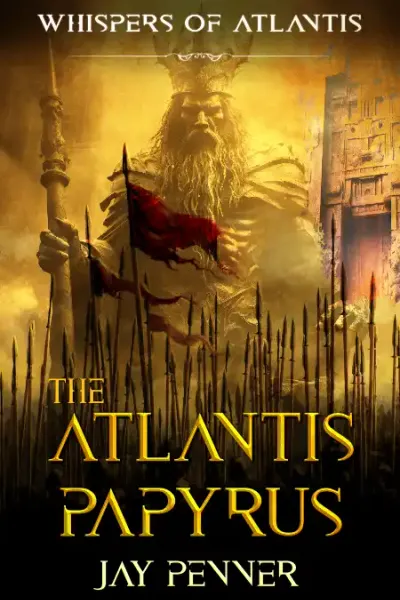
Whispers of Atlantis ● Book 6 of 7 ● Also in paperback
Lost cities. Buried armies. Ancient secrets. Seven thrilling tales where fact meets fiction.
The Death Pit★★★★★
The House is Empty. The Wife is Missing. Now Someone Wants Him Dead. What should a scribe who has never held a weapon do?
Returning home to find his pregnant wife vanished, royal scribe Nemur is cast into a diabolical conspiracy where a man of reed pens and clay tablets must confront terrifying forces to uncover the truth and save the kingdom.















About the Author
Jay Penner's highly-rated books regularly feature Amazon's category bestseller lists. Try his Spartacus,Cleopatra,Whispers of Atlantis,Hannibal orDark Shadows books.