If You Like These Authors, You’ll Love These Books
Readers often want to know: whose books are mine like? Well, I guess the answer is, “it depends.”
Each of the wonderful authors I mention below has a unique voice, but I suppose I could approximately bucket some of my works that may appeal more to the readers of one set of authors vs. another. Don’t take these too seriously! I added this page just to provide a little more context for my books and help guide users who might have some ideas about what they’d like to read based on their author preferences.
My style
We all have our styles, and pretty much all my books follow that style, as some of my long-time readers might attest. My prose is generally direct and focused on gritty realism. It does not have the lyrical beauty of some authors, and my books are certainly not for those looking for historical romance or more literary/classical prose (Madeline Miller’s brilliance comes to mind). I do not have a specific preference when it comes to the point of view, and it depends entirely on the story I’m telling. Some are first-person, some third-person, and some mix the two between the protagonist and other characters.
Something else: I combine research with exciting storytelling and you will find that most milestones and key events in these books follow well-known historical facts. Almost all my books feature a Notes section to go through some of the “known history” behind the book, and I strive for realism in timelines, customs, politics, and military tactics. Love maps? You’ll get them too!
Ancient Adventure: Quests, Tombs, and Lost Worlds
Wilbur Smith, Christian Jacq, Paul Doherty, Pauline Gedge, Michelle Moran, and Valerio Massimo Manfredi
This one is for readers who love a thrilling mix of ancient history with a page-turning adventure or saga.
Wilbur Smith, Christian Jacq, Paul Doherty, Pauline Gedge, Michelle Moran, Valerio Massimo Manfredi come to mind. In these books, the ancient past is a thriller.
This is the heart of my Whispers of Atlantis anthology. Start with The Atlantis Papyrus — a captain hired to steal scrolls from Alexander the Great’s sarcophagus, for a reason that turns out to be a lie. Or The Curse of Ammon, the story of Cambyses’ lost army and the man who wanted it lost. For a Mesopotamian mystery, The Death Pit follows a royal scribe searching for his missing wife in 2005 B.C. Ur. In The Crimson Aten, a thief during Nefertiti’s time is thrust into the viper’s nest of royal succession and becomes besotted with a princess. Many of the books are standalones, each set in a different corner of the ancient world, and great if you want to hop on somewhere and drop off elsewhere.


The Gritty Grimy World of Ancient Warfare
Ben Kane, Simon Scarrow, Adrian Goldsworthy, and Bernard Cornwell
Ben Kane, Simon Scarrow, Adrian Goldsworthy, and Bernard Cornwell write the Roman world from the mud up. Shield walls, centurions’ barks, long marches, metal and mud, and the camaraderie of men who only have each other.
My Greatest Enemy trilogy — The Mist of Trasimene, The Dust of Cannae, and The Ash of Zama — follows an Insubrian cavalryman through the Hannibalic wars, told from the side Rome usually writes about last. My Spartacus trilogy — Soldier, Slave, Savior — starts before the rebellion you know, with a young Thracian learning what a soldier is before the chains ever come.
My books take you to the “not the Roman side” of the conflicts, putting you in the shoes and eyes of the slaves, the barbarians, and the like. I dwell little on the lives of the Roman elite because this is about those who go up against their might, while having personal agendas of their own. The books are generally gritty, and you should expect violence as was the norm then.


Empires and Matters of Kingdoms
Conn Iggulden, Christian Cameron, and Steven Pressfield
Conn Iggulden, Christian Cameron, and Steven Pressfield write the ancient world at scale.
The Wrath of God is probably my closest fit, but it’s set in worlds far older. Think about 3,500 years ago. A young Atalanni general is sent across the Great Green Sea against a pharaoh, with the fate of two kingdoms and one catastrophic secret riding on him. Maurya also belongs here — Seleucus Nicator’s war with a rising Indian emperor, told through envoys sent into an unfamiliar world where wit cuts as deep as the sword. But Maurya is part of a series with recurring characters, so you’ll want to begin with the first book in the series, The Atlantis Papyrus.

Queens, Courts, and Character-Driven History
Margaret George, Colleen McCullough, and Stephanie Dray
Margaret George, Colleen McCullough, and Stephanie Dray write the ancient world from inside the palace. Politics as a weapon, marriage as a treaty, and a central figure — usually a woman — navigating a court where survival is a daily negotiation.
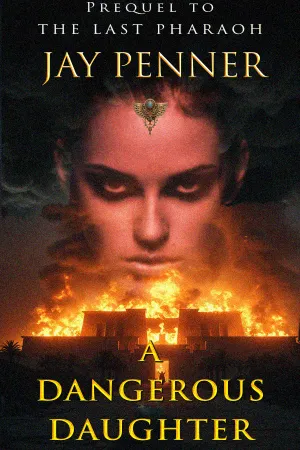
My Cleopatra series is written for this reader. Start with Regent — Cleopatra at sixteen, inheriting a kingdom on the edge of civil war and a Rome banging on the door for debts. It continues through Queen and Empress, with the prequel A Dangerous Daughter covering her father’s exile and her education in Roman politics at age twelve. Closely weaving known history with a page-turning tale of ambition, ruthlessness, and cunning, this is a series you’ll love, just like the thousands who have already read it.


Ancient Secrets Meet Modern Thrillers
Dan Brown, Clive Cussler, Brad Thor, David Baldacci, and Robert Harris
Dan Brown, Clive Cussler, Brad Thor, David Baldacci, and Robert Harris are some of the great examples here. Brown’s symbologists, Cussler’s NUMA operatives and ancient artifacts (I loved Clive Cussler’s books when I was younger!), Thor and Baldacci’s elite units racing faceless enemies, Harris’s intelligent historical-political thrillers (I loved his Imperium series, though it’s not related to modern times) — all pulling on the thread that ties ancient mysteries to modern stakes.
My Dark Shadows series is built for such readers and those who love tales of dangerous technology. The Weave opens with the arrest of a U.S. presidential nominee on evidence too perfect to be real — and two CIA operatives who chase the flaw across Turkey and Iraq into a conspiracy where ancient ambition meets modern technology. The Reclaimer continues with the same team, starting with a bomb at the Met and an artifact that seems to predict the next attack.


As they say…
What are you waiting for? Pick something and I’d love to have you as a reader! If you need some more help in what you should read first, check out my FAQ.