Was Ramesses the Pharaoh who Expelled Moses?
The Pharaoh of the Exodus
1400 - 1200 BC, Egypt
“I don’t think the Red Sea parted magically, but Ramesses fought with Moses!” declared Jay, sharing a bright-orange post that claimed the world had hidden this truth. He had just gotten nostalgic watching The Ten Commandments (1956, directed by Cecil B. DeMille), with Yul Brynner as Pharaoh Ramesses and Charlton Heston as Moses. Now, a Facebook post had him all riled up because someone in the comments said, “No way in hell!”
We’ve all heard the story of Exodus. The story of Moses and the Exodus primarily exists in the Book of Exodus in the Hebrew Bible/Old Testament. These works are generally dated to around the 15th to 13th centuries BC (~1400-1200 BC), though many scholars believe that the writing occurred centuries after the kernel of events, making the dating itself very challenging.
Moses leads the enslaved and mistreated Israelites out of Egypt after a series of plagues sent by God to convince Pharaoh to release them. This narrative is central to Jewish, Christian, and Islamic traditions.
Now, this chapter isn’t about arguing whether the Exodus or elements of it are real or not. We’ll proceed with the assertion that something happened, but whether the Egyptian Pharaoh responsible for the mistreatment and the target of God’s ire was Ramesses is up for debate. You might ask, “But which Ramesses? There are more than ten Ramesses.” Generally, popular media depicts that Pharaoh as Ramesses II, or “Ramesses the Great,” though the Book of Exodus doesn’t actually specify which Pharaoh. All it says is ‘Pharaoh’.
How do we answer the question? Well, we need to do more of the following:
- Show that the Exodus happened during the timeline of Ramesses the Great (Ramesses II), who ruled from 1279 BC to 1213 BC.
- Point to archaeological records of the Exodus—such as Egyptian writings, victory monuments, and evidence of bands in Sinai—something other than a narrative written centuries later.
- Show archaeological evidence of Ramesses II employing large slave populations for his building projects.
If we can accomplish that with a certain level of accuracy, we might be able to say, “Yes, it appears Ramesses was the bad guy.”
Let’s go one by one.
Did the Exodus happen during Ramesses’ rule?
More than ten Ramesses existed in Egypt. Ramesses’ grandfather was the first. For whatever reason, Ramesses I didn’t name his son Ramesses Junior; instead, he called him Seti I. Then, after Ramesses, there were nine more all the way to around 1077 BC.
Our Ramesses (the Great), Ramesses II, ruled from 1279 BC to 1213 BC. He receives much of the attention because he ruled for over 65 years, supposedly had hundreds of children, built magnificent temples and buildings, campaigned, and fought the Hittites. He is generally considered one of the greatest Pharaohs.
If the Book of Exodus took shape centuries after the actual events, using older oral records, there may be other Pharaohs who could also fit into the story. Since we can’t accurately date the events of the Exodus, it could be this Ramesses or a powerful Pharaoh who came earlier. Thutmose III or Amenhotep II are good candidates that align better with a more traditional dating of the Exodus to around ~1400 BC, two centuries before Ramesses II. It is not beyond imagination that a scribe writing long after the events, using oral traditions that had modified over time, simply portrayed it as being Ramesses based on more recent memory.
Did Ramesses say anything that could support the story that he was the Pharaoh in the story of Exodus?
Egyptians were prolific builders and writers. The Pharaohs, like all rulers, weren’t shy about recording their conquests, depicting their conquered people, and twisting even weak victories or defeats into victories. It’s not too hard for a Pharaoh to depict the story of Exodus as Egyptians expelling dastardly troublemaking Israelites from Egypt. So, there must be records from Ramesses’ time showing all this, right?
Large bands of foreign slaves building temples would have made for great reliefs. Ramesses built extensively — the Abu Simbel temples, the Ramesseum, the Hypostyle Hall at Karnak, the city of Pi-Ramesses, and the temples of Abu Qir are among his most impressive achievements. The man built like there was no tomorrow.
Yet, in none of these is there any evidence of large-scale enslavement, capture, conquering, or driving out of a foreign people. Scholars now dismiss the older assertions of Egyptians using slave labor for their building projects. Extensive excavations in Deir el-Medina and the Ramesseum show well-organized, compensated workforces. There is no evidence of a mistreated large population of foreign slaves, either during, before, or after Ramesses’ time.
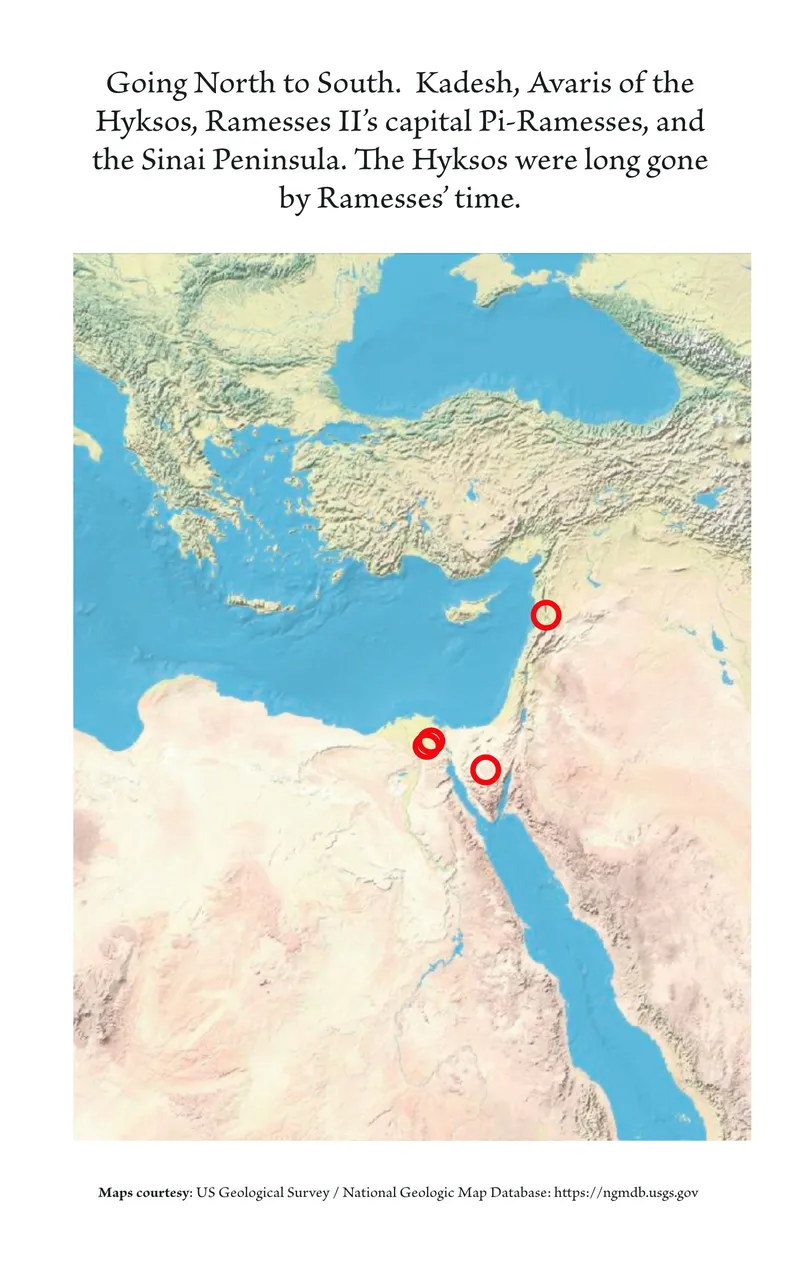
Oh, when the Egyptians did drive out foreigners, they sure yelled very loudly about it. It so happens that about three hundred years before Ramesses, there was another group that ruled Egypt’s northern regions — the Hyksos. Hyksos is a Hellenized form of the original Egyptian word ḥqꜣ-ḫꜣswt, or loosely, “Heqa-Khawsut,” which translates to “rulers of hill or foreign lands.” They were likely Semitic people from Canaan and had, over centuries, made Egypt their home. But the Egyptians hated them, and finally, Ahmose I, the famous founder of Egypt’s famed 18th dynasty, waged war and drove them out around 1500 BC.
So if there are distinct records of Egyptians driving a foreign people out, it was the Hyksos. Similarly, if Ramesses did something similar (whether they left or he sent them is immaterial because a Pharaoh trumpeting his deeds would make it look like he did it, anyway), we should have seen a lot of hurrah: “I did this and I did that” in some temple, and we see none of that.
Leaving aside temples, what about victory monuments or stelae? Ramesses recorded his most famous campaign—the Battle of Kadesh, fought ~1274 BC near the Syria-Lebanon border against the Hittite King Muwatalli II. The records of this battle are the earliest in history depicting precise military formations and numbers, as well as the eventual peace treaty. Why does this matter? Well, if Ramesses was so keen on advertising what was actually not a victory but more a détente, then surely he would have had something to say about expelling troublemakers, but he says nothing at all.
The Exodus also speaks of many pestilences that God harassed the Pharaoh with, and yet there is scant evidence in Ramesses’ reign suggesting any of it happened.
There is another hypothesis that sometimes surfaces: that the “parting of the Red Sea” could describe the cataclysmic eruption in Thera (~1600 BC) that might have had a rippling effect on the Mediterranean shores. That’s a really flimsy connection, and almost no modern scholar believes the eruption could have had such an effect on Egyptian shores.
Even if it were true, we’d have a timing problem, because the Pharaoh then was either Ahmose or, more likely, his father or grandfather Sequenenre Tao — nearly four hundred years before Ramesses. That would actually prove definitively that Ramesses was not the Pharaoh of the Exodus. Besides, Ahmose and his father/grandfather were engaged in fighting the Hyksos, and there is nothing from their time that alludes to fighting the Israelites — unless we pivot and decide the Hyksos were the Israelites. In that case, we’d have to go against the Old Testament, because the Hyksos actually ruled a part of Egypt, and they were no slaves.
Ultimately, none of the theories or events add up.
Where does that leave us? We have a lot of evidence from Ramesses II’s time, but none of it references the events of Exodus. Now, could there be a kernel of truth that small mistreated groups eventually left? Yes, it’s possible. But whatever it was, it wasn’t a big enough event for the Pharaoh to say much about.
The story that Ramesses II was the Pharaoh who expelled Moses remains popular but is far from proven. While there are connections — such as the city of Ramesses and the grandeur of Ramesses II’s reign — significant chronological and archaeological challenges persist.
Alternative candidates, such as Amenhotep II or Thutmose III, align more closely with the traditional dating of the Exodus. The evidence is too scant to argue passionately either way — but it is quite reasonable to say that, at the very least, Ramesses the Great probably wasn’t the Pharaoh of the Exodus.
To buy this in book format: here | For sources and acknowledgments see here.


Whispers of Atlantis ● Book 7 of 7 ● Also in paperback
Lost cities. Buried armies. Ancient secrets. Seven thrilling tales where fact meets fiction.
The Crimson Aten ★★★★★
Thief or the Savior of a Dying Kingdom?
Hapu the thief's greatest heist is about to thrust him into a viper's nest where, bewitched by a princess and pursued by a murderer, he must navigate an insidious conspiracy to shield the Queen from those who would drown Egypt in blood. First time visitor? This novel is a fantastic way to get introduced to the anthology!


















About the Author
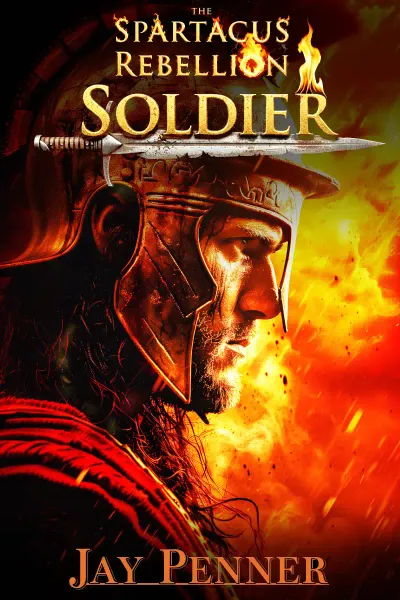
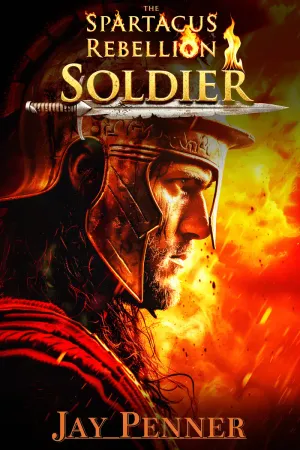
Jay Penner's highly-rated books regularly feature Amazon's category bestseller lists. Try his Spartacus, Cleopatra, Whispers of Atlantis, Hannibal or Dark Shadows books.