Notable People
KEY HISTORICAL SOURCES
This book repeatedly refers to a few well-known ancient writers—historians, biographers, military commanders—who lived closer to the events described and often provided the earliest accounts of major occurrences that later became famous through retelling and modern renditions. Knowing these figures will help you appreciate the content better and give you a clearer sense of the timelines.
The personalities are ordered roughly in descending order, with the earliest occurring first.
Herodotus: Herodotus, born in Halicarnassus (modern-day Bodrum, Turkey), around 484 BC, is known as the “Father of History.” His major work, “The Histories,” recounts the Greco-Persian Wars and provides a detailed account of the ancient world. Herodotus traveled extensively, collecting stories and descriptions of different lands and peoples, making his work a valuable source of historical and ethnographic information. He provides some of the earliest, still-surviving detailed external accounts of Egypt, the Persian Empire, and even India.
Megasthenes: Megasthenes, born in Asia Minor (modern-day Turkey) around 350 BC, was a Greek historian, diplomat, and traveler. He is known for his work “Indika,” an account of his travels and observations in India during his time as an ambassador to the court of the Indian king Chandragupta Maurya. Although the original work is lost, fragments preserved in later sources provide valuable insights into ancient India and its customs.
Kautilya/Chanakya: Kautilya, also known as Chanakya or Vishnugupta, was an Indian statesman, philosopher, and royal advisor (though there is dispute whether his work is of one person or many) who lived around 300 BC. He is best known for his work “Arthashastra,” a treatise on statecraft, economic policy, and military strategy. Kautilya’s ideas profoundly influenced Indian political thought and helped shape the Mauryan Empire under Chandragupta Maurya.
Julius Caesar: Gaius Julius Caesar, born in Rome around 100 BC, was a Roman statesman, military general, and author. His most famous literary works are “Commentarii de Bello Gallico” (“Commentaries on the Gallic War”), an account of his campaigns in Gaul, and “Commentarii de Bello Civili” (“Commentaries on the Civil War”), which describes his conflict with Pompey the Great. Caesar’s writings offer a unique first-hand perspective on his military campaigns and provide insights into his strategic thinking and leadership. His books are likely the only first-hand ancient accounts written by an accomplished general. “Commentarii de Bello Gallico” is also where we first learn of the ancient Britons.
Diodorus Siculus: Diodorus Siculus, born in Agyrium (now Agira), Sicily, around 90 BC, was a Greek historian. His main work, “Bibliotheca Historica” (“Historical Library”), is a 40-volume universal history that covers events from mythological times to Julius Caesar’s Gallic Wars. Although not all volumes have survived, Diodorus’ work provides valuable insights into the Hellenistic period and the years following Alexander the Great’s death.
Sallust: Gaius Sallustius Crispus, known as Sallust, was born in Amiternum (modern-day San Vittorino), Italy, around 86 BC. He was a Roman historian and politician. Sallust’s most notable works include “Bellum Catilinae” (“The Conspiracy of Catiline”), an account of the Catilinarian conspiracy, and “Bellum Jugurthinum” (“The Jugurthine War”), which chronicles the war against Jugurtha of Numidia. He is also one of the earliest sources for the Spartacus wars, though only a few tantalizing fragments of his work on that have survived.
Strabo: Strabo, born in Amaseia (present-day Amasya, Turkey), around 64 BC, was a Greek geographer, philosopher, and historian. His most notable work, “Geographica,” is a comprehensive description of the known world’s geography and peoples. Strabo traveled widely, drawing on his observations and earlier works to create a detailed 17-volume opus that greatly influenced later geographical and historical writing. Strabo was possibly in Alexandria at the time of Cleopatra’s death.
Pliny the Elder: Pliny the Elder, born Gaius Plinius Secundus in Como, Italy, in 23 AD, was a Roman author, naturalist, and natural philosopher. His most significant work, “Naturalis Historia” (“Natural History”), is a 37-volume encyclopedia covering topics from astronomy and geography to art and human physiology. Pliny’s work, although not always accurate by modern standards, provides valuable insights into Roman knowledge and understanding of the world. Interesting fact: Pliny died in the eruption of Mount Vesuvius.
Josephus: Titus Flavius Josephus, born Yosef ben Matityahu in Jerusalem around 37 AD, was a Romano-Jewish historian and military leader. His major works include “The Jewish War,” an account of the Jewish rebellion against Roman rule (66-70 AD), and “Antiquities of the Jews,” a 20-volume history of the Jewish people from creation to the outbreak of the revolt. Josephus’ writings offer a unique perspective on Jewish history and the Roman-Jewish conflict.
Plutarch: Plutarch, born in Chaeronea, Greece, around 45 AD, was a Greek biographer, essayist, and Middle Platonist philosopher. He is best known for his “Parallel Lives,” a series of biographies that compare famous Greeks and Romans, and his “Moralia,” a collection of essays on various topics, including philosophy, religion, and science. Plutarch’s works offer a wealth of information about the ancient world and have influenced countless writers and thinkers. He is among our best sources on Cleopatra and Spartacus.
Arrian: Arrian, or Lucius Flavius Arrianus, was born in Nicomedia (modern-day Izmit, Turkey), around 86 AD. He was a Greek historian, military commander, and philosopher. Arrian’s most famous work, “Anabasis of Alexander,” is a detailed account of Alexander the Great’s campaigns. He also wrote works on philosophy, geography, and military tactics, drawing from his experiences and earlier historical sources.
This does not mean there weren’t others, but the figures above occur more than once and are worth remembering. It is important to note that many events covered in this book were first chronicled by these writers sometimes hundreds or even thousands of years after the fact. This is why simply relying on ancient accounts alone is not enough. Extensive archaeological discovery and other evidentiary support are necessary to determine if something really happened. After all, they were human too; they got figures and facts wrong, recounted hearsays, and missed things in translation. It is upon us to put everything together to make sense of ancient events. Case in point: Herodotus’ accounts of the Egyptian Pyramids are the earliest we have from outside Egypt, and yet when Herodotus wrote about them, the Pyramids were already older to him than he is to us!
I’ve used BC and AD for the periods before 1 BC and after 1 AD for simplicity.
Ready? Let’s go! The chapters are ordered roughly from the newest (to us) to the oldest.
To buy this in book format: here | For sources and acknowledgments see here.
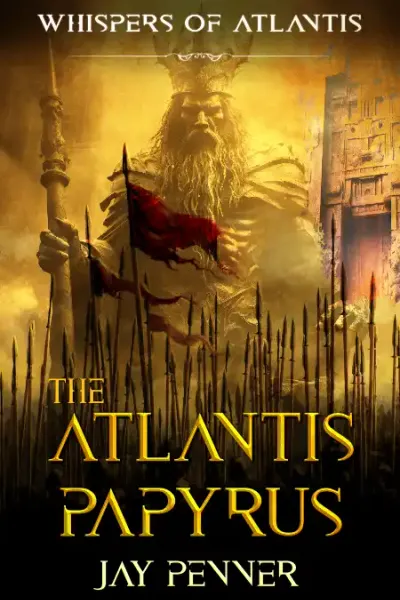
Whispers of Atlantis ● Book 1 of 7 ● Also in paperback
Lost cities. Buried armies. Ancient secrets. Seven thrilling tales where fact meets fiction.
The Atlantis Papyrus ★★★★★
A stolen scroll. A thousand-year-old secret. An impossible choice.
When Captain Deon accepts a forbidden quest to steal scrolls from Alexander the Great's sarcophagus and save his family from the mines, little does he know the mission is a lie—and a stunning ancient secret will force him to choose between his kin and a million lives. GRAB THE LIMITED TIME DEAL!




About the Author
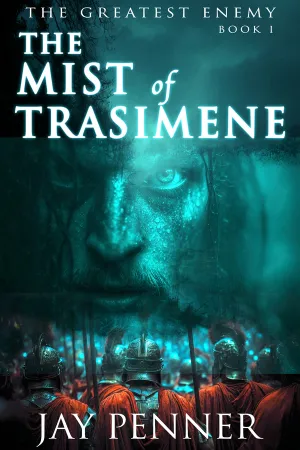
Jay Penner's highly-rated books regularly feature Amazon's category bestseller lists. Try his Spartacus, Cleopatra, Whispers of Atlantis, Hannibal or Dark Shadows books.