Introduction
What to keep in mind...
INTRODUCTION
I’m so thrilled you want to read this, history enthusiast!
I am the author of (mostly) ancient historical fiction novels that aim to bring the past to life by mixing known history with an entertaining tale. But whether fiction or not, I love ancient history, and I have profound respect for all the professionals—historians, archaeologists, scientists, engineers, librarians, curators, amateur enthusiasts, policymakers, and administrators—who engage in uncovering the past and helping us learn who we are and where we came from.
Creating an accurate picture of people who lived thousands of years ago and events that happened long before there was a systematic approach to documenting anything is a daunting task. It often involves a combination of luck and perseverance, bringing together scant pieces of evidence, inferences, logic, science, extrapolation, and context to create a sensible and realistic picture of a world long gone. Think of it this way: if future people five thousand years from now were asked to create a picture of our lives based on a few cooking utensils, a couple of building inscriptions, a few tantalizing pages from a preserved newspaper, and a few crumbling, long-buried buildings, how challenging would it be?
Like many fans of ancient history, I have my fair share of looking at social media posts and shaking my fists. The modern digital world comes with its good and bad. It connects us to strangers all around the world in an instant and lets us share ideas, thoughts, ambitions, and fears. At the same time, the Internet is rife with misinformation created solely to raise passions and garner views. In that world, like many other subjects, ancient history is a victim. How many times have we seen people wondering if aliens built the Pyramids or AI generated Atlantis wonderlands?
I spend considerable time researching my subjects when I write my novels. This time, I thought, why not write an easy-to-read, evidence-based non-fiction book that picks on popular topics? That’s how “Wait, what?” came to life. I hope you find the book informative and enjoyable. Each chapter focuses on presenting what we know, by way of available archaeological evidence or credible ancient sources, and helping solve the Wait, what? sentiment. In each case, I try to present the most recent known evidence or the oldest known writing to take you as close as possible to the origin of some of these stories, and I hope you’ll find them fascinating.
The tone is deliberately casual, with some light humor, and is meant to be easy reading. This is not an academic research paper.
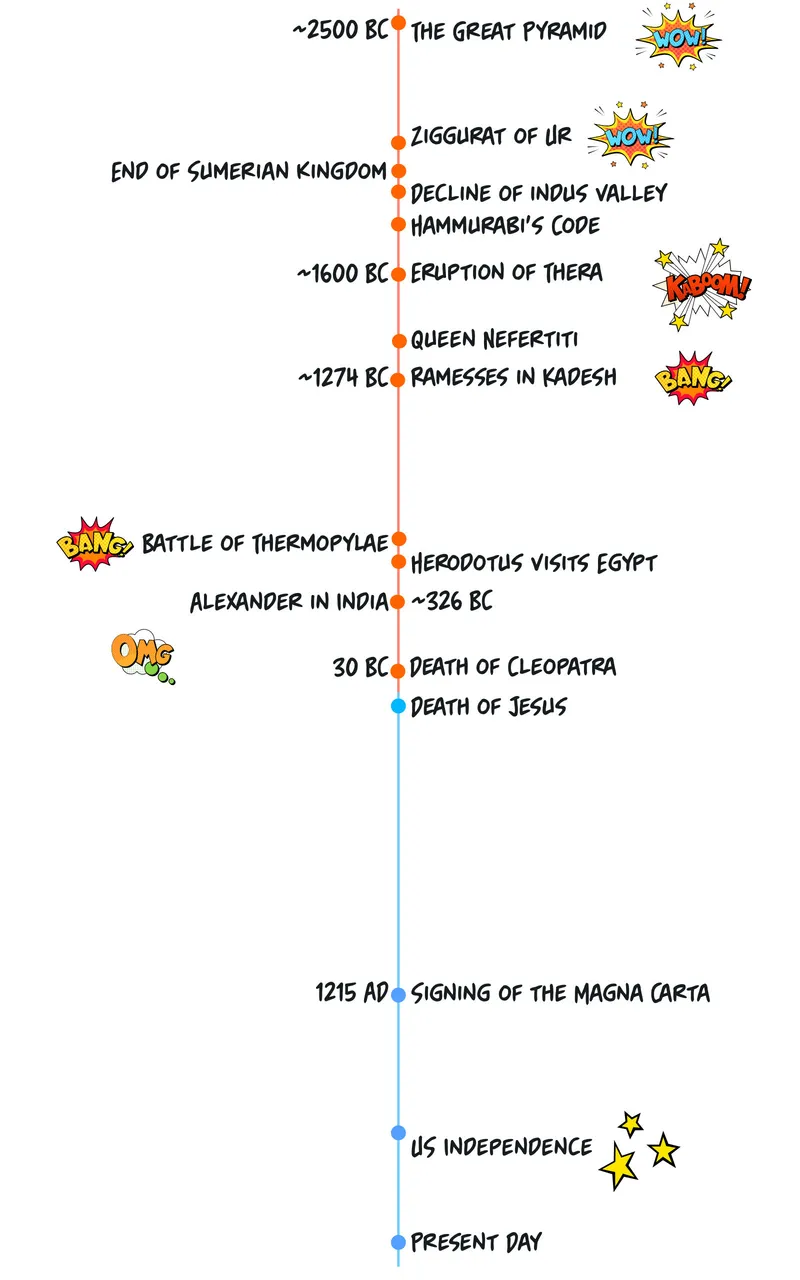
As you reach each chapter, I ask that you keep something in mind: time and distance. Today, we are used to traveling across the globe and knowing what happened halfway around the world in literally seconds. Often, we read about ancient achievements with a distorted sense of time and velocity. Sometimes, people look at the ruins of the Ziggurat of Ur and wonder how someone built it 4,500 years ago. But we forget that it would have taken decades to construct it, and the design would have considered learnings from previous centuries. Everything took a lot longer, required a lot more people, and for every marvel we see, we don’t see hundreds upon hundreds of failed experiments. For every brave hero we hear about, we don’t know about thousands who were never written about or whose deeds have been lost to time.
Here’s another example: many think Hannibal descended on Italy with his elephants, won a couple of battles, and then lost. How long was he in Italy? A year? Six months? He was in Italy for fifteen years! Often, these details are lost when we watch compressed documentaries and snippets. We also tend to take ancient sources literally, forgetting that those writers were people too, and their accounts, often a recounting of events already very old or confirming to established norms of the time, could also be full of factual errors. These themes will occur in the chapters.
Most chapters end with a terrible cartoon*, drawn by yours truly, and I assure you no intelligence, artificial or not, was involved in their creation. The characters, structure, and dialogue are all mine; some decorative backgrounds were generated.
When you’re done, if any of those worlds interest you, please give my novels a try. You’ll learn more and have fun along the way.
The world is a wonderful and fascinating place, and I often marvel at the ingenuity of our ancients, who accomplished many things with basic tools and limited knowledge of the time.
Come now, as we look at statements that make us go, “Wait, what?” and then answer some questions along the way.
To buy this in book format: here | For sources and acknowledgments see here.
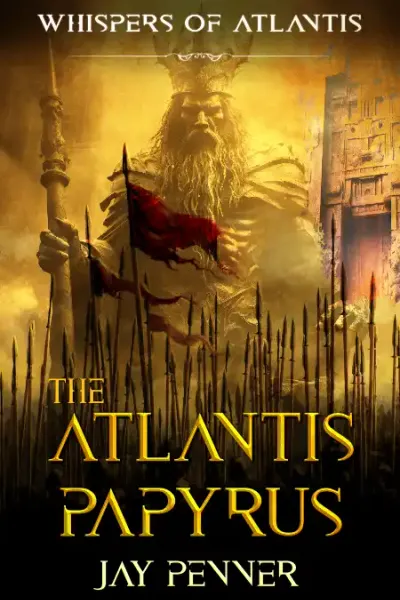
Whispers of Atlantis ● Book 1 of 7 ● Also in paperback
Lost cities. Buried armies. Ancient secrets. Seven thrilling tales where fact meets fiction.
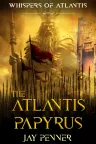
The Atlantis Papyrus ★★★★★
A stolen scroll. A thousand-year-old secret. An impossible choice.
When Captain Deon accepts a forbidden quest to steal scrolls from Alexander the Great's sarcophagus and save his family from the mines, little does he know the mission is a lie—and a stunning ancient secret will force him to choose between his kin and a million lives. GRAB THE LIMITED TIME DEAL!

About the Author
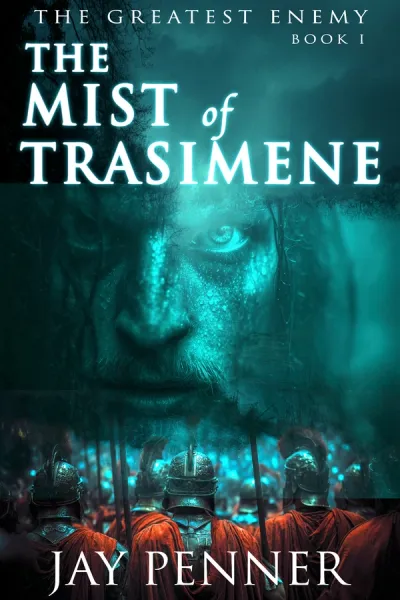
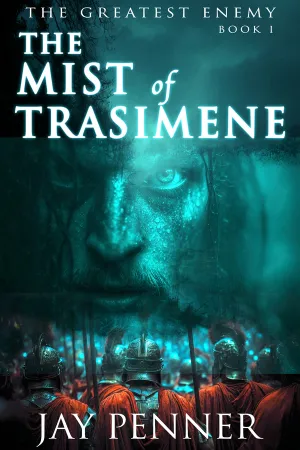
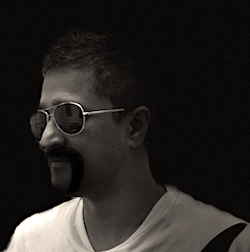
Jay Penner's highly-rated books regularly feature Amazon's category bestseller lists. Try his Spartacus, Cleopatra, Whispers of Atlantis, Hannibal or Dark Shadows books.